Sea Grass Meadow Restoration
Did you know we have seagrass in Cumbria?
This is the second year of the project, managed by the Cumbria Wild Life Trust and supported by donations from Ozone and the Environmental Agency, aiming to revive vast seagrass beds in Walney Channel near Barrow in order to help tackle climate crisis and bring back precious marine ecosystems.
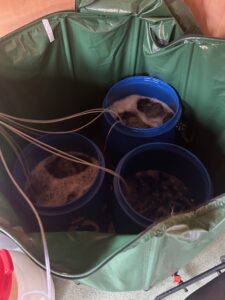
Seagrass is the only flowering plant that lives fully underwater, though it can be seen at low tide. It provides a unique and rich habitat for snails, crabs, anemones and fish, and foraging ground for waders and wildfowl.
Seagrass beds can also play an important role in tackling climate change. Carbon-rich sediment is stored around the plants and they also draw carbon from the atmosphere and store it in the seabed.
The UK has lost 90% of all seagrass beds over the last century and in Morecambe Bay, around 70% has been lost. Recent surveys show that around 70ha (127 acres) of seagrass remains in the Walney Channel – that’s around the size of 63 football pitches. But there should be much more!
For several years, we’ve been helping to carry out baseline studies of seagrass beds in the region, surveying their size and condition, in collaboration with universities across the North West.
Last year we supported restoration trials on the seagrass beds , to bring them back to their former size and health so they can thrive, along with the species that rely on them.
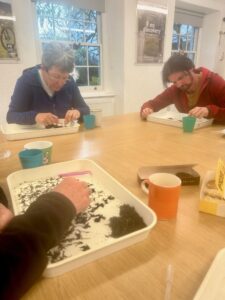
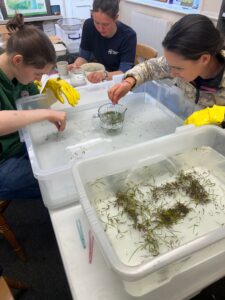
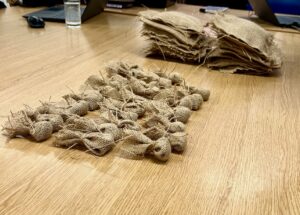
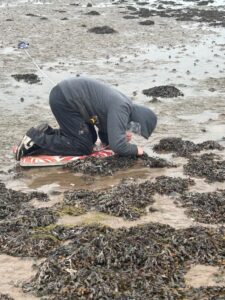
This involved collecting seagrass seeds from healthy sites, preparing the seeds for future planting and then of course the planting itself.
By helping this fantastic ecosystem to recover, and by working with other organisations across the North West and Wales we aim to bring about an Irish Sea that’s healthier and wilder in the long term.
This year monitoring of the existing sea grass meadows has taken place in Walney Channel, at Roa Island and Sandscale Hawes. Numerous days have been spent on the sand collecting seeds and then preparing them for storage and ultimately to be planted..